Homemade Croissants Step By Step
Highlighted under: Sweet Oven Classics
I have always been fascinated by the flaky, buttery layers of a freshly baked croissant. After several attempts, I finally mastered the art of making homemade croissants from scratch. Each step in the process has taught me something new, from the importance of temperature control to the way the dough transforms as it rests. The aroma that fills the kitchen while they bake is simply irresistible, making all the time and effort worth it. Join me in this journey of creating croissants that are truly a labor of love!
Making homemade croissants has been one of my most rewarding kitchen adventures. I learned that the secret lies in the lamination process, where butter and dough come together in a beautiful dance. The key is to keep everything cold; I even use a marble surface to prevent the butter from melting too quickly.
After a few trials, I've found that allowing the dough to rest overnight in the fridge yields the flakiest results. I also love to experiment with fillings like chocolate or almond paste, which add a delightful twist to every bite.
Why You Will Love This Recipe
- Flaky, buttery layers that melt in your mouth
- The satisfaction of making pastry from scratch
- Endless possibilities with different fillings
Understanding Dough Temperature
Temperature plays a crucial role in the success of your croissants. When making the dough, it's important to use lukewarm milk to activate the yeast effectively; this typically falls between 100°F and 110°F. If your milk is too hot, it can kill the yeast, while too cold milk will slow down the fermentation process. Proper temperature control throughout the lamination process also affects the butter's ability to stay solid while creating those delicate layers, so keep your kitchen cool if necessary.
During the resting periods, allow the dough to relax completely. If you feel resistance when rolling out the dough, it means it needs more time to rest. A well-rested dough will be elastic and easier to shape, resulting in a flakier croissant. Pay attention to how the dough changes; it should expand slightly after each resting session, indicating the yeast is working its magic.
Laminating Like a Pro
The lamination process is where the magic happens. The aim here is to create multiple layers of dough and butter. When rolling out, ensure your dough is uniform in thickness—about ¼ inch works well. If the butter starts to ooze out during rolling, it’s a sign that it’s too warm, and you should refrigerate the dough to maintain the integrity of the layers. Each fold and roll creates layers that will puff up in the oven, contributing to that desirable flaky texture.
Make sure to chill the dough regularly between folds. If you're working in a warmer kitchen, you may need to chill it more frequently, even after every fold. This way, the butter remains pliable yet firm, allowing for better layering without mixing into the dough. A seamless lamination will lead to croissants that are airy and delicious while avoiding common failures like gummy patches or flat pastries.
Customizing Your Croissants
One of the joys of making croissants at home is the opportunity to infuse them with your favorite flavors. Consider adding chocolate, almond paste, or even a savory filling like ham and cheese. For sweet croissants, sprinkle a little sugar over the rolled dough before shaping or include a layer of fruit preserves. Experimenting with different fillings can elevate your croissants and tailor them to your preferences.
If you want to make a larger batch, this recipe scales beautifully. Simply multiply the ingredients, but be mindful of your workspace; you may need to laminate the dough in batches. For storage, properly rolled but unbaked croissants can be frozen for up to a month. Just make sure to place them in a single layer on a baking sheet first and then transfer them to an airtight container—when you're ready to bake, there's no need to thaw!
Ingredients
For the Croissant Dough
- 500g all-purpose flour
- 10g salt
- 40g sugar
- 10g instant yeast
- 300ml milk, lukewarm
- 150g unsalted butter, cold
For the Egg Wash
- 1 egg, beaten
- 1 tablespoon milk
Make sure to always use cold ingredients for the best results!

Instructions
Make the Dough
In a mixing bowl, combine the flour, salt, sugar, and yeast. Gradually add the lukewarm milk and knead until a soft dough forms. Let the dough rest for 30 minutes.
Prepare the Butter Layer
Shape the cold butter into a flat rectangle between parchment paper. Chill it again if it starts to soften.
Lamination Process
Roll out the dough into a large rectangle, place the butter in the center, and fold the dough around it. Roll out again to create layers, folding it into thirds each time. Repeat this process 3 times, chilling for 30 minutes in between.
Cut and Shape the Croissants
Roll the laminated dough into a large rectangle and cut it into triangles. Gently stretch each triangle and roll from the base to the tip to form the croissants.
Proof
Place the rolled croissants on a baking sheet lined with parchment paper. Cover and let them rise at room temperature until doubled in size, about 1-2 hours.
Bake
Preheat the oven to 200°C (400°F). Brush the croissants with the egg wash and bake for 15-20 minutes or until golden brown.
Allow the croissants to cool slightly before serving for a perfect flaky texture!
Pro Tips
- Keep your ingredients as cold as possible during the lamination process for the perfect flaky croissants.
Troubleshooting Common Issues
If your croissants don’t rise sufficiently during proofing, it may be due to inactive yeast. Always check the expiration date on your yeast, and ensure that the milk used is at the right temperature. Additionally, proofing in a warm, draft-free area can encourage a successful rise. If they seem too dry or tough after baking, it might be due to overworking the dough—next time, maintain a gentle touch during the lamination process.
Flat croissants can occur if the butter melts into the dough during rolling. Ensure that your butter is cold enough and that your kitchen temperature is conducive to keeping the butter solid. Using a pastry mat can help maintain the right surface temperature during the rolling process, keeping everything nice and cold.
Serving Suggestions
Freshly baked croissants are best enjoyed straight out of the oven, but they can also be transformed into delightful sandwiches. Consider filling them with egg salad, fresh vegetables, or even pulled pork for a gourmet twist. Pair your croissants with a cup of coffee or tea for a perfect breakfast or brunch option.
If you have leftover croissants, they can be reheated in the oven for a few minutes at 350°F. This will restore their crisp outer layer and make them taste freshly baked again. A light drizzle of honey or a sprinkle of powdered sugar can also add a touch of sweetness if you’re serving them as a dessert.
Questions About Recipes
→ Can I use whole wheat flour instead of all-purpose?
Yes, but the texture may be denser. It's best to use a blend of whole wheat and all-purpose flour.
→ How do I store leftover croissants?
Store them in an airtight container at room temperature for up to 2 days, or freeze them for longer storage.
→ Can I make the dough ahead of time?
Absolutely! You can prepare the dough and keep it in the fridge overnight before continuing with the lamination process.
→ What if I don’t have instant yeast?
You can use active dry yeast instead, but be sure to activate it in warm milk before adding it to the dry ingredients.
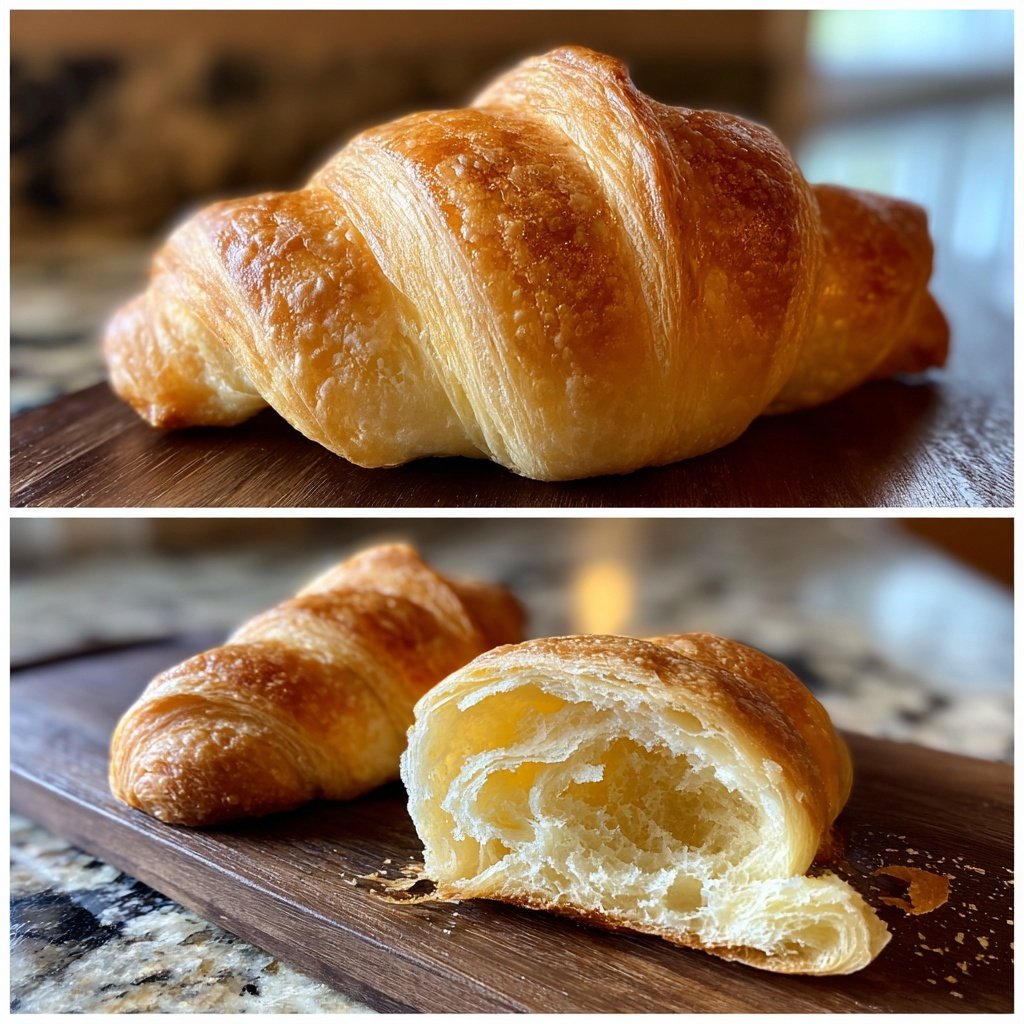
Homemade Croissants Step By Step
Created by: Callie Morgan
Recipe Type: Sweet Oven Classics
Skill Level: Advanced
Final Quantity: 12 croissants
What You'll Need
For the Croissant Dough
- 500g all-purpose flour
- 10g salt
- 40g sugar
- 10g instant yeast
- 300ml milk, lukewarm
- 150g unsalted butter, cold
For the Egg Wash
- 1 egg, beaten
- 1 tablespoon milk
How-To Steps
In a mixing bowl, combine the flour, salt, sugar, and yeast. Gradually add the lukewarm milk and knead until a soft dough forms. Let the dough rest for 30 minutes.
Shape the cold butter into a flat rectangle between parchment paper. Chill it again if it starts to soften.
Roll out the dough into a large rectangle, place the butter in the center, and fold the dough around it. Roll out again to create layers, folding it into thirds each time. Repeat this process 3 times, chilling for 30 minutes in between.
Roll the laminated dough into a large rectangle and cut it into triangles. Gently stretch each triangle and roll from the base to the tip to form the croissants.
Place the rolled croissants on a baking sheet lined with parchment paper. Cover and let them rise at room temperature until doubled in size, about 1-2 hours.
Preheat the oven to 200°C (400°F). Brush the croissants with the egg wash and bake for 15-20 minutes or until golden brown.
Extra Tips
- Keep your ingredients as cold as possible during the lamination process for the perfect flaky croissants.
Nutritional Breakdown (Per Serving)
- Calories: 300 kcal
- Total Fat: 19g
- Saturated Fat: 11g
- Cholesterol: 50mg
- Sodium: 210mg
- Total Carbohydrates: 30g
- Dietary Fiber: 1g
- Sugars: 2g
- Protein: 6g